What is a stop-loss?
A stop-loss is a price you pick in advance where you'll sell if a trade goes wrong. It turns "how bad could this get?" into a number you chose while calm.
A simple example
You buy Bitcoin at $60,000 and set a stop-loss 2% lower, at $58,800. If the price falls to $58,800, it sells automatically. You lose about 2% of that trade plus fees, and you're out, instead of watching it fall 20% while hoping it comes back.
Why beginners skip it (and regret it)
- "It might come back." Sometimes it does. Sometimes it falls another 50%.
- "I don't want to sell at a loss." The loss already happened; the stop just stops it growing.
- "I'll watch it myself." Crypto trades 24/7. You sleep.
The clever part: stops decide your size
Good risk management works backwards from the stop. Say you're willing to lose $20 on a trade, and your stop is 2% below your buy price. Then the most you should buy is $20 ÷ 2% = $1,000. A wider stop means a smaller buy. That way, every losing trade costs about the same, small amount.
What a stop-loss can't do
- Gaps. If the price jumps straight past your stop, you sell at the next available price, which can be worse.
- Noise. A stop that's too tight gets hit by normal wiggles. Too wide and the losses get big.
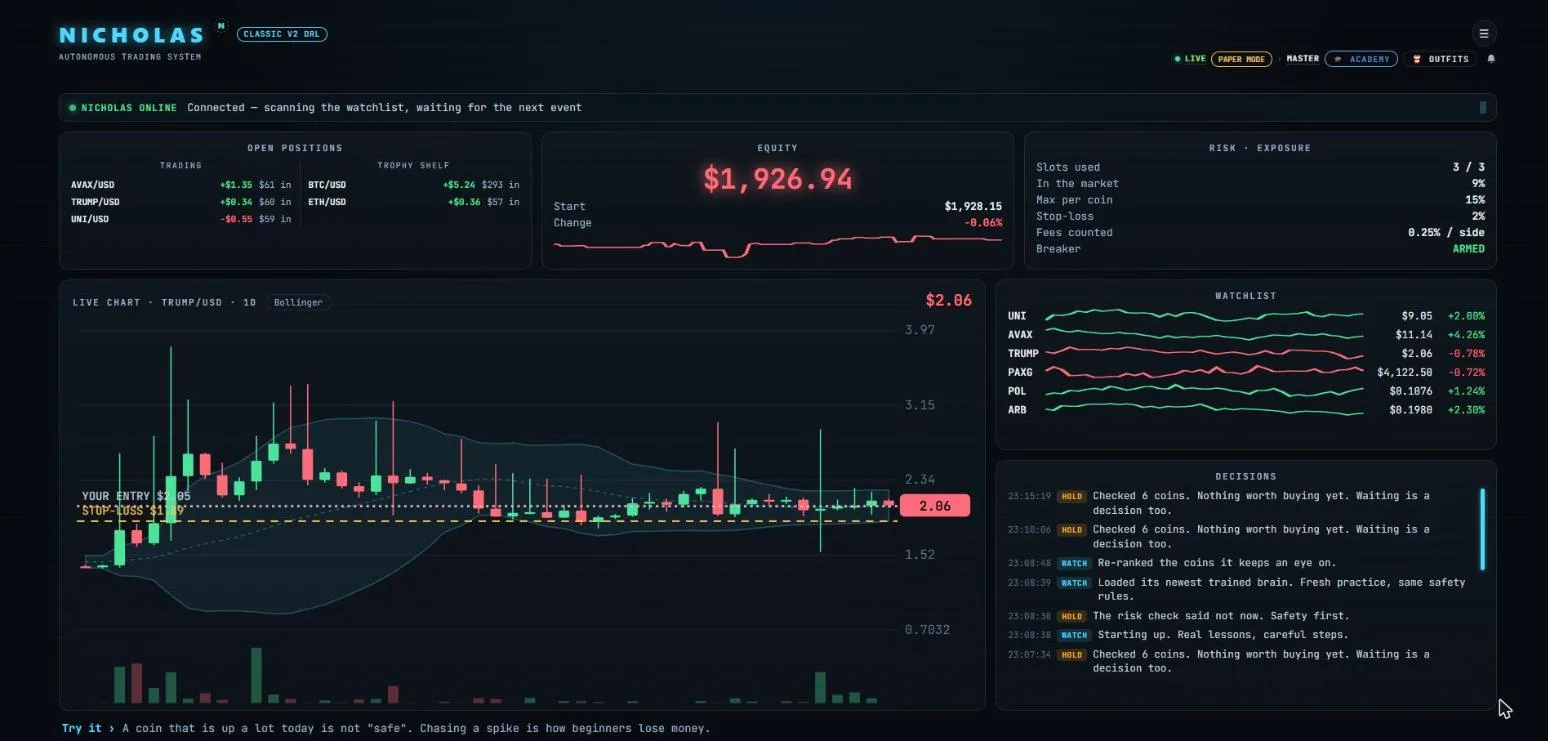
How Nicholas uses stops
Every position Nicholas opens has a stop-loss set straight away, and the trade size comes from how far away that stop is. On top of that, no single coin can take more than 15% of the account, and a circuit breaker halts new buys after a rough day. Only a human can switch it back on.